
⚠️Download content with copyright is illegal. This article purpose is only to technically knowledge.
In this article I'm going to explain how configure a complete scenario to automate your own multimedia library. From request of new content to the visualization in your own platform (in this case, jellyfin).
Scenario
The all components to make this article are virtualized with container technology over Docker software:
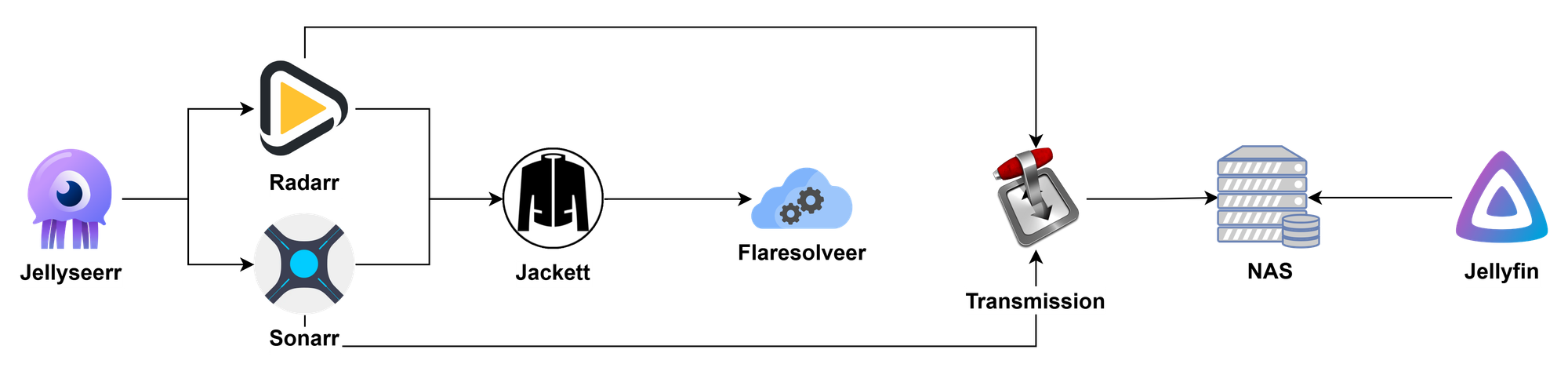
- Jellyseerr: Connected with Jellyfin, this is the hub where the users can request new movies and tv shows.
- Radarr: This software is specialized to search and administrate the downloads of movies.
- Sonarr: This software is specialized to search and administrate the downloads of tv shows and their seasons.
- Jacket: So that radarr and sonarr can add new content to download (torrents), they new to know repositories to search the content of new content. They have an own configuration place to administrate them, but require that the answer of their requests have a specific schema and a lot of cases we're going to download torrents from a web page. Jackett is an app that search in web portals and results transform to valid RSS schema to radarr and sonarr understand.
- Flaresolverr: Jackett connect to webpages as an automation "bot" and a lot of them use Cloudflare platform services to deny access to your content to bots. This software simulate as an human access to webpage avoiding the restrictions.
- Transmission: This software is used to administrate the downloads of content requested.
- NAS: This device will be the centralized location in your private LAN where we save the downloads of requests and where jellyfin going to search the multimedia file to play.
- Jellyfin: This software is the multimedia platform where the users can found the movies and tv shows of your collection. In market we have more alternatives; Plex, Embdy...
I choosed this because are fully opensource and have a multiple native client apps (mobile, smartv and computers)

Member discussion: